
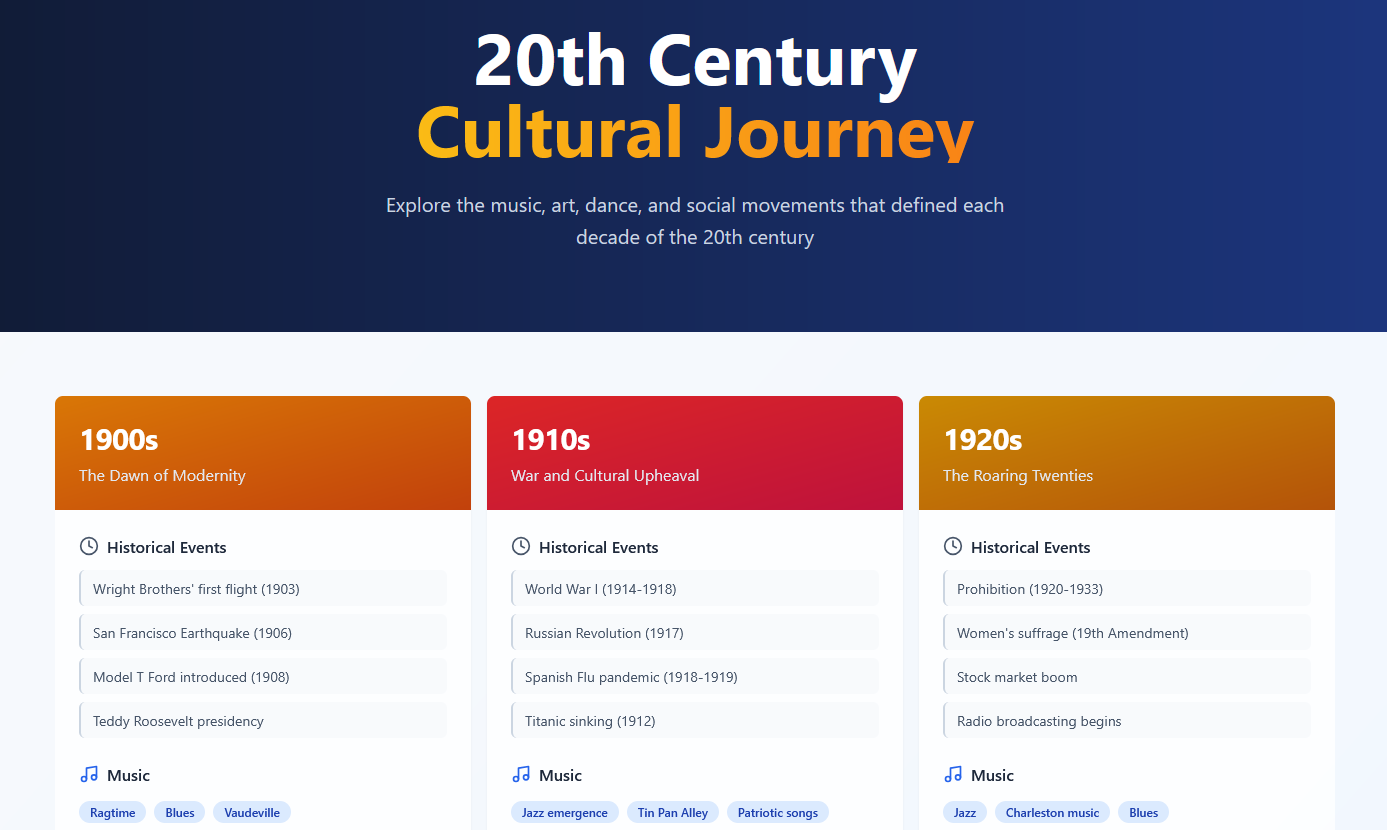

Explore the music, art, dance, and social movements that defined each decade of the 20th century: 20th Century Cultural Journey
Introduction
Humanity bears trauma not just in memory but deeply in the body. Across centuries, crises—plagues, wars, displacement, oppression—have left imprints in rhythm, movement, and communal sound. Music and dance are more than culture; they are embodiments of body intelligence—unconscious systems through which societies discharge what cannot be spoken. When words fail, rhythm and movement act.
Ancient Rituals and Medieval Somatic Release
In ritual contexts, dance and music synchronized bodies and regulated communal stress. One of history’s most fascinating somatic phenomena is dancing mania (or choreomania), which afflicted medieval Europe during the Black Death. Entire groups danced involuntarily for hours or days—sometimes to collapse or death—a pattern scholars interpret as mass psychogenic response to trauma. Such events highlight how somatic dynamics can encode collective grief. MDPIMoving Together
Embodied Anthropological Perspectives
Fields like ethnochoreology shed light on how dance functions beyond aesthetics—it is a “producer of meaning,” living within social contexts as both mirror and shaper of collective experience. Wikipedia
Anthropological embodiment theory challenges mind–body dualism. It emphasizes how experiences—especially trauma—are materialized and lived through the body. This frame helps explain how rhythmic movement can ground fragmented experience. Wikipedia
Colonialism, Enslavement, and the Body’s Memory
For enslaved and colonized populations, dance carried ancestral memory—and was a form of embodied resistance. These communities turned to rhythm, call-and-response, and improvisation to survive dislocation and trauma. Capoeira, spirituals, and ceremonial dances became vessels for resilience.
Modern Therapeutic Practices: Dance/Movement Therapy (DMT)
In acknowledging embodied healing, Dance/Movement Therapy (DMT) has emerged as a powerful modality for trauma. It’s been used in diverse settings—from refugee camps to psychiatric clinics—to reconnect individuals to their embodied selves.
-
A 2022 qualitative study positions DMT as a multimodal “gestalt container” for trauma work, weaving creative movement with cognitive restructuring, relational safety, and social identity formation. Taylor & Francis Online
-
Among Syrian refugee children, DMT has been explored for reducing stress and PTSD symptoms. Its somatic emphasis enables integration of physical, emotional, cognitive, and social domains. PubMed
-
A systematic review found DMT helps traumatized adults reconnect with their bodies, express emotions, manage symptoms, and rebuild social relationships—especially when sessions are consistent and led by skilled therapists. MedRxiv
-
Another study affirmed that DMT supports resilience globally by offering a “whole person” approach for people who can’t express trauma verbally. PubMed
-
A trial with adolescent girls demonstrated that an eight-month dance intervention reduced somatic symptoms (like headaches, stomachaches) and emotional distress, underscoring somatic and psychological benefits. PMC
-
Dance therapy in trauma contexts must prioritize safety, culturally-sensitive movement, and therapist competence to avoid retraumatization—including recognition of multicultural and decolonizing frameworks. Taylor & Francis Online
Theoretical Foundations: Mindfulness and the Body
Mindful somatic practices foreground awareness of bodily sensations as pathways to re-regulating trauma responses. As Peter Levine and Bessel van der Kolk elucidate, trauma activates the limbic system and the vagus nerve, disrupting regulation. Attending to embodied sensations builds the capacity to pause between stimulus and response—crucial for healing. MDPI
Expressive Movement and Language Integration
Expressive movement by itself can be healing—but combining it with reflection deepens integration. In one study, participants who danced and then wrote about their experience showed enhanced health and academic performance compared to others. This suggests that translating somatic expression into narrative strengthens recovery. Reddit
Embodied Creativity and Social Activism
Historically, pioneers like Franziska Boas harnessed dance for social change and mental health. In the 1940s, Boas used creative dance with psychiatric patients in New York’s Bellevue Hospital—laying groundwork for dance as tool for mental and social integration. Wikipedia
Creative writing by movement therapists emphasizes how trauma can be transformed into coherent meaning through embodied imagination—shifting from fragmentation to expressive unity. ResearchGateMoving Together
Conclusion: The Soma Speaks
From medieval dance mania to contemporary DMT, from expressive dance paired with writing to anthropological embodiment, bodies chronicle trauma and carry the potential for healing. Dance and music articulate what words cannot: the rhythms of survival, release, and renewal. They are universal languages of collective healing—and profound repositories of embodied intelligence.
Selected References
-
Dance/Movement Therapy and Trauma: Streater (2022); Syrian refugee DMT trial; Systematic reviews on adults (2000–2022); dance intervention in adolescents Taylor & Francis OnlinePubMedMedRxivPMC
-
Embodiment & Mindful Somatic Theory: Levine, Van der Kolk, Haines MDPI
-
Anthropology & Ethnochoreology: Principles of dance as cultural and social meaning Wikipedia+1
-
Expressive Movement & Writing: Pennebaker & Krantz study Reddit
-
Historical Contributions: Franziska Boas’s early work in dance therapy Wikipedia
-
DMT Ethics & Safety: Importance of clinically informed, trauma-sensitive practice Taylor & Francis Online

 English